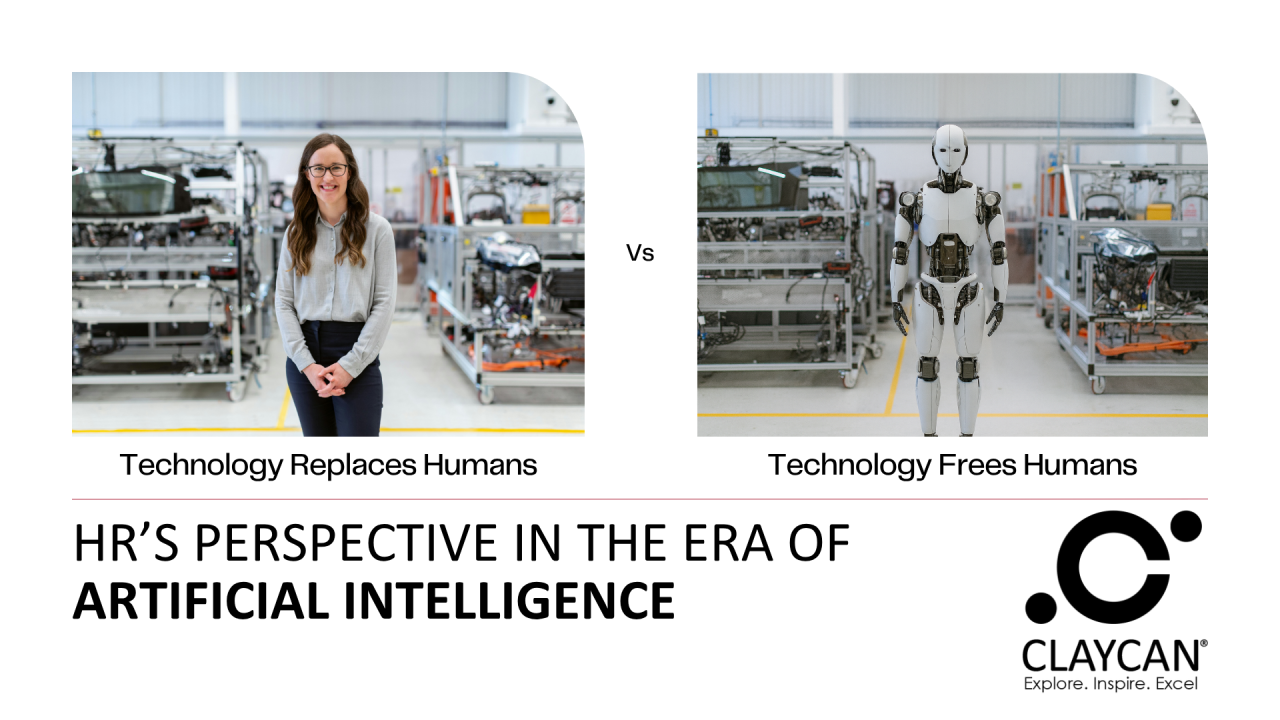
HR’s Perspective in Industrial Revolution 5.0 – The Era of AI
The world of work is standing at a transformative crossroads. Each industrial revolution has challenged norms and redefined the relationship between humans, work, and technology. Today, as we enter Industrial Revolution 5.0 – The Era of AI, we confront a paradox: Will technology replace humans, or will it free them to do what only humans can?
As an HR leader, I believe this is not just a technological debate—it is a human one. The choices we make will determine whether we build a future of displacement and alienation, or a future of empowerment, creativity, and meaning.
A Brief Look Back: Four Revolutions That Shaped Work
- Industrial Revolution 1.0 (Steam & Mechanisation): Machines replaced muscle, productivity soared, but workers became cogs.
- Industrial Revolution 2.0 (Electricity & Mass Production): Factories scaled, efficiency ruled, labor unions emerged to balance power.
- Industrial Revolution 3.0 (Computers & Automation): Machines could think faster, routine jobs declined, knowledge work rose.
- Industrial Revolution 4.0 (Digital, IoT & Robotics): The digital-physical fusion blurred lines between human and machine; efficiency became exponential.
Now, Industrial Revolution 5.0 – The Era of AI seeks to reclaim balance. It is not just about smarter technology but about human-centric AI—innovation that enhances human capabilities rather than erases them.
The Core Question of IR 5.0 – The Era of AI
At its heart lies a dilemma:
- Technology Replaces Humans: Fear-driven narratives suggest AI, robotics, and automation will eliminate millions of jobs.
- Technology Frees Humans: Hope-driven visions see machines taking over routine tasks, liberating humans for creativity, empathy, and leadership.
Both are possible. The deciding factor will be how leaders, especially HR, design the ecosystem of work.
When Technology Replaces Humans: Risks in the Era of AI
- Job Displacement
- Dehumanization of Work
- Widening Inequality
- Loss of Purpose
When Technology Frees Humans: Opportunities in the Era of AI
- Liberation from Drudgery
- Amplified Creativity
- Personalized Work Experiences
- Re humanised Workplaces
The HR Imperative in Industrial Revolution 5.0 – The Era of AI
1. Redefine Work Beyond Tasks
Shift from job descriptions to human value descriptions—empathy, judgment, creativity.
2. Drive Lifelong Learning
Make continuous up-skilling a cultural norm. AI literacy is not optional.
3. Balance Efficiency with Empathy
Ask: Does this AI decision make us more human, or less?
4. Promote Human-AI Collaboration
Train employees to see AI as a partner in progress, not a rival.
5. Build Cultures of Purpose
Keep the “why” of work central. AI should serve meaning, not mute it.
Shaping the Narrative: From Fear to Freedom
Employees often think: “AI will take my job.” HR must shift this to: “AI will take my task, so I can do my best work.”
This requires transparency, trust, and proactive communication. Organizations must position AI as a collaborator, not a competitor.
Case Study: Healthcare in the Era of AI
A healthcare company introduced AI in diagnostic imaging. Doctors feared redundancy. Instead, roles were reframed: AI handled first-level scans, doctors focused on complex diagnoses and patient empathy.
The outcome? Higher efficiency, deeper engagement, and better care. Technology freed, not replaced.
Looking Ahead: HR as Custodian of Humanity
In Industrial Revolution 5.0 – The Era of AI, technology has no ethics, empathy, or values—it only has capacity. HR must infuse conscience, compassion, and culture.
We are not just policy-makers; we are guardians of human dignity in the age of AI.
Conclusion
Industrial Revolution 5.0 – The Era of AI presents a once-in-a-century opportunity. Technology can either:
- Replace humans, leading to displacement and loss of purpose.
- Or free humans, leading to creativity, empathy, and rehumanized workplaces.
The difference lies in leadership. HR’s role is to ensure that machines do what they do best—process, calculate, repeat—while humans do what only they can—imagine, empathize, and connect.
The question is not whether AI will replace us. The real question is:
Will we allow it to, or will we design a future where AI frees us?